
Introduction: A Simple Answer to Bland Pasta
A good pasta dinner needs a sauce with bold flavor. However, many store-bought sauces can taste overly sweet or flat. This homemade Red Sauce Recipe solves that problem with rich tomatoes, fresh garlic, herbs, and a few smart cooking steps. Enjoy a delicious, flavorful pasta sauce without spending hours in the kitchen. Perfect for a busy weeknight dinner!
This homemade Red Sauce builds deep flavor without spending all day in the kitchen. Tomato paste adds richness, while garlic and olive oil create a strong aromatic base. Then, canned tomatoes bring fresh tomato flavor and a smooth texture. The result is a versatile sauce for pasta, pizza, and many Italian-inspired meals. Best of all, it uses simple pantry ingredients and easy cooking techniques.
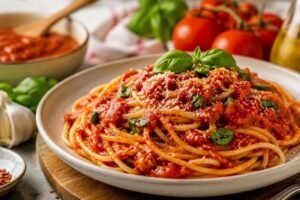
Why This Homemade Red Sauce Recipe Works
It Develops Rich Flavor in Less Time
A delicious tomato sauce does not always need hours of cooking. With the right ingredients and a few simple steps, you can create a rich, flavorful sauce in much less time. This red sauce recipe starts by cooking tomato paste in olive oil, which gives it a deeper flavor and brings out its natural sweetness.
Garlic adds another layer of flavor to the sauce. As it gently cooks in olive oil, it becomes fragrant and slightly sweet. Red pepper flakes give the sauce a little heat, while dried oregano adds a warm, earthy taste. When all these ingredients come together, they create a delicious base that makes the sauce taste like it has been simmering for hours.
Made with Simple Pantry Ingredients
You don’t need a long shopping list to make a delicious homemade sauce. Most of the ingredients in this red sauce recipe are everyday kitchen staples. Canned whole tomatoes provide a rich tomato base, while tomato paste adds extra depth. Olive oil, garlic, oregano, basil, and salt bring everything together.
One thing I love about homemade sauce is how easy it is to adjust. If you enjoy spicy food, add a few more red pepper flakes. Want a fresher taste? Mix in some extra basil. You can even add a little butter to balance the natural acidity of the tomatoes. These small changes let you make the sauce exactly how you like it without making the recipe complicated.
Perfect for Quick and Easy Weeknight Dinners
After a busy day, spending hours in the kitchen isn’t always possible. That’s where this red sauce recipe comes in handy. It is simple to prepare and can cook while your pasta is boiling on another burner. You can also make a larger batch and save some for another meal.
There are plenty of ways to enjoy this sauce throughout the week. Pour it over spaghetti, spread it on homemade pizza, or use it in baked pasta dishes. It also pairs nicely with meatballs and vegetables. Having homemade red sauce ready in the refrigerator or freezer makes preparing a quick, comforting dinner much easier.
Red Sauce Ingredients
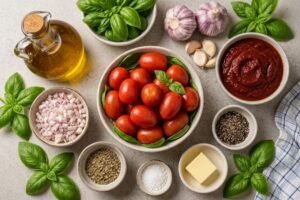
Whole Peeled Tomatoes
Whole peeled tomatoes are the heart of this recipe. They provide the main tomato flavor and create the sauce’s body. Good canned tomatoes are especially useful because they offer consistent results throughout the year. Their juices also help create a balanced sauce consistency while the mixture simmers.
Whole tomatoes give the cook more control over texture. They can be blended completely for a smooth sauce. Alternatively, they can be crushed for a more rustic texture. This choice makes the recipe flexible for different pasta dishes. The tomatoes should be added with their juices because those juices contain valuable flavor and moisture.
Olive Oil and Garlic
Extra-virgin olive oil creates the first layer of flavor. It also carries the flavors of garlic, oregano, and pepper flakes throughout the sauce. Garlic should be cooked gently rather than aggressively. High heat can burn garlic quickly and create bitterness. Therefore, starting with moderate or low heat gives better control.
Crushed garlic releases its flavor into the oil as it warms. The goal is light golden garlic, not dark brown garlic. Once the garlic becomes fragrant, the sauce has a strong aromatic base. It’s a small step, but it adds a layer of flavor that makes the finished sauce taste noticeably better. Patience during the first few minutes helps create a sweeter and richer flavor.
Tomato Paste for Rich Flavor
Tomato paste is one of the most important ingredients for quick tomato sauce. It has already been reduced, so its tomato flavor is concentrated. When it cooks briefly in olive oil, the flavor becomes deeper and less raw. This creates caramelized notes that make the finished sauce taste fuller.
The paste should not simply be stirred into cold tomatoes. Instead, it should cook with the aromatics for a few minutes. Stirring and pressing the paste helps it soften into the oil. This step creates another layer of tomato flavor before the canned tomatoes arrive. As a result, the sauce develops richness much faster.
Herbs and Seasonings
Dried oregano brings a warm and earthy flavor to the sauce. Red pepper flakes add optional heat and help create a more interesting flavor profile. Fresh basil is usually added later because its delicate flavor can fade during long cooking. Salt should be added gradually because canned tomatoes may already contain some sodium.
These simple seasonings work together without hiding the tomatoes. The goal is not to create a heavily spiced sauce. Instead, each ingredient should support the natural tomato flavor. Therefore, tasting the sauce during cooking is important. A small adjustment near the end can often improve the overall flavor balance.
Butter Is Optional
Butter is optional, but it can create a softer finish. Tomatoes naturally have tangy edges, and a small amount of butter can round them out. It also adds a touch of dairy sweetness and makes the sauce feel richer. However, the sauce remains delicious without butter.
A cook can decide based on personal taste. Those who prefer pure tomato flavor may skip it completely. Those who enjoy a smoother and richer sauce may add a small amount at the end. The butter should melt gently into the finished sauce. It should not replace the tomatoes or overpower the herbs.
How to Make Red Sauce Step by Step
Step 1: Start With the Aromatics
Place olive oil and crushed garlic in a large pot. Heat them gently over moderately low heat. This slower method gives the garlic time to release its flavor into the oil. Watch the garlic carefully because it can burn quickly. Once it starts becoming lightly golden, add the red pepper flakes.
Next, add dried oregano and stir for about a minute. The herbs will become fragrant as they warm in the oil. This creates a flavorful foundation before adding the tomatoes. The aromatic base is important because the sauce needs flavor at every stage. Starting carefully creates better results later.
Step 2: Cook the Tomato Paste
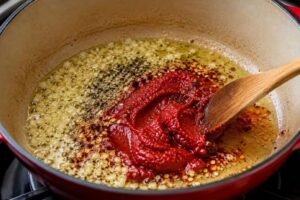
Add tomato paste to the pot with the garlic and seasonings. At first, the paste may look thick and firm. Continue stirring and pressing it into the olive oil. After a few minutes, it should soften and become easier to combine. This step helps remove the raw taste of canned tomato paste.
Cooking the paste also develops deeper flavor. The tomato sugars become slightly more complex during gentle frying. Therefore, the sauce gains richness before the larger amount of tomatoes is added. Keep the heat controlled and stir regularly. The goal is deeper flavor, not burnt tomato paste.
Step 3: Add the Tomatoes
Pour the whole peeled tomatoes and their juices into the pot. Increase the heat slightly until the mixture reaches a gentle simmer. The tomatoes can then be broken down using an immersion blender. Blend them directly in the pot if a smooth texture is desired.
For a chunkier texture, crush the tomatoes by hand before cooking. A potato masher can also break them down inside the pot. Both methods create a rustic sauce with visible tomato pieces. The texture depends on personal preference. Therefore, there is no single correct way to process the tomatoes.
Step 4: Simmer Until Rich
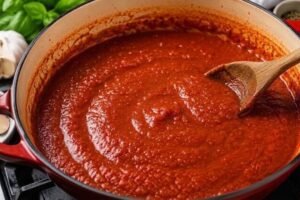
After the tomatoes are prepared, let the sauce simmer gently. Stir occasionally so the bottom does not stick. During simmering, some water evaporates and the sauce becomes slightly thicker. The flavors also begin to meld together. A gentle simmer creates better results than aggressive boiling.
The sauce does not need hours of cooking for good flavor. Around 30 minutes can create a rich and satisfying result. However, the exact time may vary depending on the tomatoes and desired consistency. If the sauce becomes too thick, a small amount of water can help. If it seems thin, allow more time for reduction.
Step 5: Finish With Basil and Butter
Fresh basil should be added near the end of cooking. This keeps its flavor brighter and fresher. Let the basil simmer briefly so its aroma moves through the sauce. Then taste the mixture and adjust the salt if needed. This final tasting step is important for flavor balance.
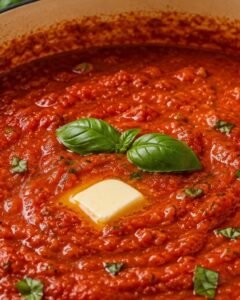
If using butter, stir it in after the sauce has finished simmering. The butter should melt completely and blend smoothly into the tomatoes. Then remove any large basil stems before serving. The finished Red Sauce should taste rich, balanced, and full of tomato flavor without feeling heavy.
How to Control the Texture of Your Red Sauce Recipe
How to Make a Smooth Red Sauce Recipe
A smooth sauce is easy to create with an immersion blender. Blend the tomatoes until no large pieces remain. This method works well for spaghetti and dishes that need an even coating. Blending also helps combine the tomato juices, olive oil, and cooked aromatics into one smooth mixture.
For the best safety, keep the blender head fully inside the sauce. Hot liquids can splash during blending. Blend slowly and stop occasionally to check the texture. A smooth sauce should still feel rich rather than watery. If necessary, continue simmering after blending to create a thicker consistency.
How to Make a Chunky Red Sauce Recipe
A chunky sauce needs less blending. Crush the tomatoes by hand or use a potato masher. Leave some pieces larger for a rustic texture. This style works especially well with sturdy pasta shapes. The tomato pieces create a homemade appearance and a more varied texture.
The garlic can also remain in larger pieces if desired. However, some cooks may prefer crushing it further for a smoother bite. The important point is texture control. Whole peeled tomatoes give the cook several options. Therefore, one basic red sauce recipe can produce either a smooth or chunky sauce.
How to Fix a Red Sauce Recipe That Is Too Thick or Thin
A sauce may become too thick when too much moisture evaporates. In that case, add a small splash of water. Stir well and allow the sauce to warm again. Add water slowly because too much can weaken the flavor. Pasta cooking water may also work when serving the sauce with pasta.
If the sauce is too thin, continue simmering without a lid. This allows extra moisture to evaporate naturally. Stir occasionally and check the consistency every few minutes. Tomato paste can also thicken a sauce, but it should be used carefully. Too much can change the flavor and make the sauce overly concentrated.
Tips for Making the Best Homemade Red Sauce Recipe
Do Not Burn the Garlic in Your Red Sauce Recipe
Burnt garlic can make an entire sauce taste bitter. Therefore, low and moderate heat are better choices. Garlic should gently sizzle instead of frying aggressively. The moment it becomes dark brown, bitterness can develop. Watching the pan during this stage is one of the easiest ways to improve your red sauce recipe.
Starting garlic in cooler oil can provide extra control. As the oil warms, the garlic slowly releases its flavor. This creates a sweet garlic taste rather than a harsh one. Once the garlic becomes lightly golden, the remaining ingredients can be added. Good garlic control creates a better foundation.
Cook Tomato Paste Properly for a Rich Red Sauce Recipe
Tomato paste needs a few minutes of cooking before adding the tomatoes. This simple step changes its flavor and texture. The paste becomes softer and blends into the olive oil. It also develops a deeper and slightly caramelized character. Skipping this step can leave the sauce tasting less developed.
Stir the paste regularly so it cooks evenly. It should not burn against the bottom of the pot. Moderate heat works best because the paste is thick and concentrated. Once it smells rich and looks darker, the tomatoes can be added. This technique creates a stronger tomato base for your red sauce recipe.
Adjust the Heat Carefully
Red pepper flakes can vary greatly in heat. One brand may be mild, while another can be much stronger. Therefore, starting with a small amount is safer. More flakes can always be added later, but excessive heat is harder to remove. The goal is gentle warmth, not overwhelming spice.
The pepper flakes work well in olive oil because their spicy compounds are fat-soluble. This helps distribute the heat throughout the sauce. A balanced amount adds complexity without hiding the tomatoes. Taste the sauce before adding more spice. Every household may prefer a different heat level.
Taste Your Red Sauce Recipe Before Adding Extra Salt
Salt can improve tomato flavor, but too much can ruin the sauce. Canned tomatoes and tomato products may already contain sodium. Therefore, the sauce should be tasted near the end. Add salt gradually and stir before tasting again. Small adjustments often produce better results.
The same idea applies to other seasonings. More oregano or pepper flakes should be added carefully. The sauce should taste balanced rather than heavily seasoned. A good tomato sauce allows the main ingredients to remain noticeable. Fresh tomato flavor should stay at the center of every bite.
Ways to Use This Homemade Red Sauce Recipe
Serve Red Sauce Recipe with Pasta
This red sauce recipe works beautifully with spaghetti, penne, rigatoni, and many other pasta shapes. Tossing pasta directly with the sauce helps every piece get coated. A little reserved pasta water can help the sauce cling better. Then add grated cheese, fresh basil, or cooked vegetables if desired.
The sauce also works as a simple base for meatballs or chicken. Its balanced tomato flavor makes it easy to pair with other ingredients. For a quick dinner, cook pasta while the sauce simmers. Then combine everything before serving. This creates a comforting homemade meal without complicated preparation.
Red Sauce for Pizza
A thicker version of the sauce can work as a pizza base. Allow the sauce to reduce slightly before spreading it over dough. Use a thin layer because too much sauce can make pizza heavy. The garlic and tomato flavor pair well with cheese and common pizza toppings.
For pizza, a smoother texture is often easier to spread. However, a rustic sauce can also work for homemade flatbreads. The sauce can be prepared in advance and refrigerated. This makes homemade pizza night easier. A versatile tomato sauce can support several meals from one batch.
Red Sauce for Spaghetti
Spaghetti is one of the most popular uses for tomato-based sauce. Its long strands hold a smooth sauce well when everything is tossed together. The sauce should be warm when the cooked pasta is added. This allows the flavors to combine more evenly before serving.
For a more complete meal, serve spaghetti with vegetables, meatballs, or a simple salad. The sauce can remain the main flavor without needing many extra ingredients. A small amount of basil can brighten the finished plate. This makes the meal simple, comforting, and suitable for regular family dinners.
Other Italian-Inspired Meals
This sauce can also support many other meals. Use it in baked pasta, vegetable casseroles, or sandwiches. It can become a base for shakshuka-style dishes or simple bean meals. The rich tomato flavor works with many ingredients because it is not overly complicated.
A large batch can make future meals easier. Divide cooled sauce into smaller sealed containers. Each portion can then be used for a different recipe. This approach reduces cooking time during busy days. A good homemade tomato sauce is more than a pasta topping because it can become a useful kitchen staple.
How to Store and Freeze Red Sauce
Refrigerating Homemade Sauce
Allow the sauce to cool before placing it into sealed containers. Do not leave it at room temperature longer than necessary. Once cooled, refrigerate it and use it within a few days. Always check the sauce before reheating if it has been stored for several days.
Using smaller containers can make serving easier. Each container can hold enough sauce for one meal. This also reduces repeated reheating of the entire batch. Labeling containers with the preparation date can help with organization. Proper storage makes homemade cooking more convenient during the week.
Freezing Red Sauce
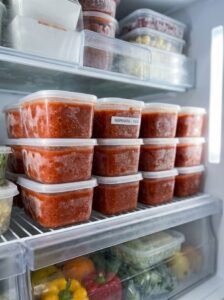
Red sauce freezes well and can be useful for future meals. Let the sauce cool completely before freezing. Leave some space at the top of each container because liquids can expand. Smaller portions are usually easier to thaw and use.
Frozen sauce can be kept for longer storage than refrigerated sauce. For best quality, use airtight containers suitable for freezing. Thaw the sauce in the refrigerator when possible. Then warm it slowly in a pot. Stir occasionally until the texture becomes smooth and evenly heated.
Reheating the Sauce
Reheat the sauce over low or medium-low heat. Stir regularly so it warms evenly. If it becomes too thick, add a small splash of water. The sauce may naturally thicken during refrigeration or freezing. Gentle reheating helps restore a smooth consistency.
Taste the sauce again after reheating. Sometimes a small pinch of salt or fresh basil can refresh the flavor. However, avoid adding many new ingredients without tasting first. The original flavor should still remain balanced. Reheated homemade sauce can make a fast dinner feel freshly prepared.
Frequently Asked Questions
What Is Red Sauce Made Of?
Red sauce is usually made from tomatoes, olive oil, garlic, herbs, and seasonings. Many recipes also include tomato paste for deeper flavor. Common herbs include basil and oregano. Some versions use red pepper flakes for heat, while others remain mild. Butter may also be added for a richer finish.
The exact ingredients can vary by family, region, and cooking style. Some sauces use fresh tomatoes, while others use canned whole tomatoes. Some are smooth, while others are chunky. However, tomatoes remain the central ingredient. The supporting ingredients should enhance the tomato flavor instead of covering it.
How Do You Make Red Sauce?
The basic method begins with olive oil and aromatics. Garlic is cooked gently until fragrant and lightly golden. Red pepper flakes and oregano can then be added. Tomato paste is cooked briefly to deepen its flavor. After that, tomatoes and their juices are added to the pot.
The tomatoes are blended or crushed depending on the preferred texture. Then the sauce simmers gently until the flavors meld together. Fresh basil can be added near the end. Finally, the sauce is tasted and adjusted with salt. This method creates a rich homemade Red Sauce with simple ingredients.
What Is Red Sauce vs Marinara?
Red sauce is a broad term that can describe many tomato-based sauces. Marinara is usually a simpler Italian-style tomato sauce. It often uses tomatoes, garlic, olive oil, and herbs. However, recipes can vary depending on the cook and region.
Some red sauces are cooked longer and contain additional ingredients. They may include more herbs, tomato paste, butter, vegetables, or meat. Marinara is often lighter and quicker. Therefore, the two sauces can overlap, but they are not always exactly the same. The names often depend on cooking traditions.
What Do Americans Call Red Sauce?
In the United States, many people simply call it tomato sauce or pasta sauce. In some Italian-American communities, people commonly use the term red sauce. The name can describe a basic tomato sauce served with pasta or other dishes.
The exact name often depends on region and family tradition. Some people may use marinara, gravy, spaghetti sauce, or tomato sauce for similar dishes. However, the ingredients and cooking methods can differ. Therefore, the name alone does not always explain exactly how the sauce tastes or cooks.
Final Thoughts his simple step makes a noticeable difference in the finished dish.
Make a Simple Sauce Taste Special
A great homemade sauce does not always require complicated ingredients. Good tomatoes, garlic, olive oil, herbs, and careful cooking can create impressive flavor. The most important steps are building a strong aromatic base and cooking tomato paste properly. Then gentle simmering brings everything together into a rich and balanced sauce.
This recipe is easy enough for a busy weeknight but flexible enough for many meals. It can be smooth, chunky, mild, or slightly spicy. It can also be served immediately or saved for later. Try this homemade Red Sauce with pasta, pizza, or another favorite meal. Make a batch today and enjoy simple Italian-inspired comfort food anytime.